
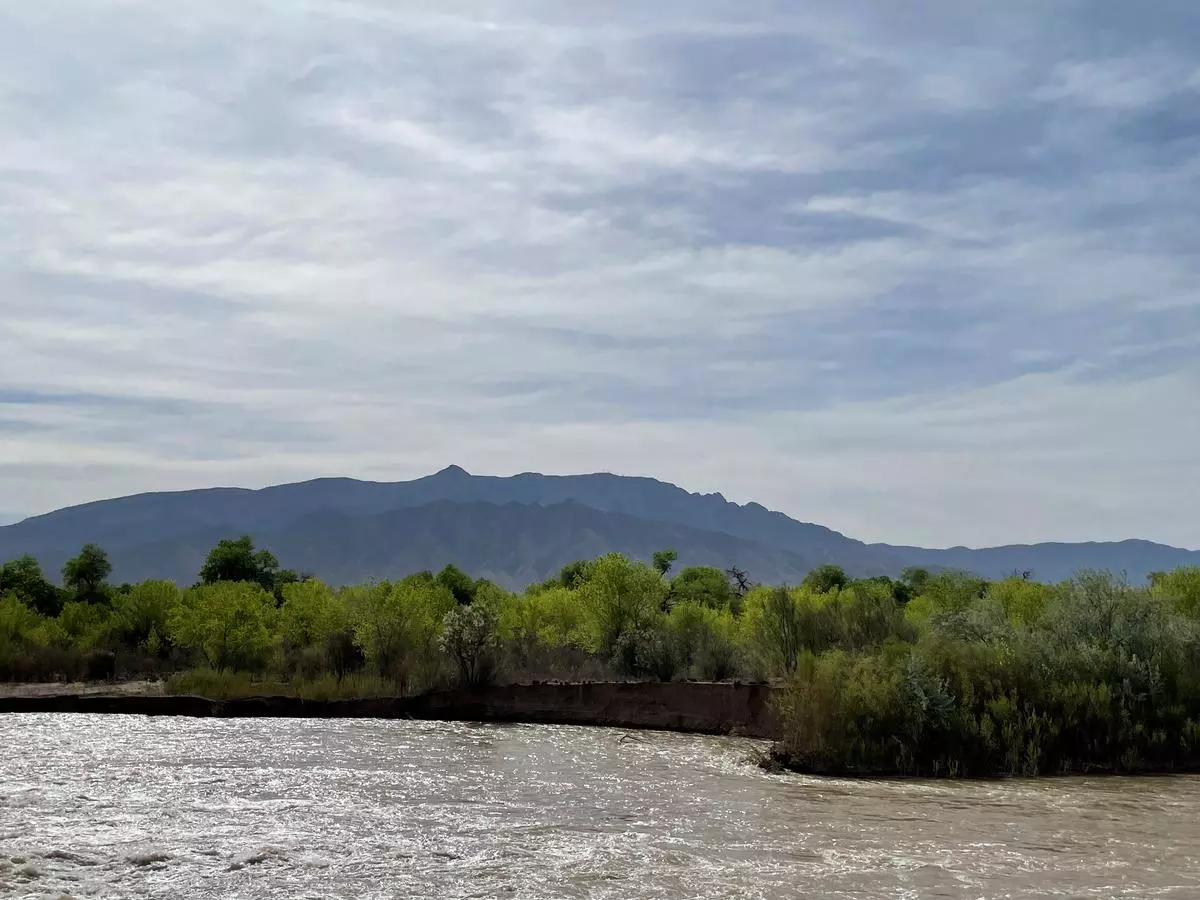
The Village of Corrales has no municipal water system thus all homes and businesses rely on domestic or commercial wells to supply water to their homes. Additionally, there is no sewer system in the Village, with the exception of a small area along Corrales Road from Alameda Blvd to Wagner Lane that has access to the STEP (Septic Tank Effluent Pump) system with removes the graywater from a septic system and sends it to the Albuquerque-Bernalillo County Water Utility Authority System for treatment. To maintain safe drinking water free from contamination from septic systems, the Village has an ordinance that only allows one dwelling unit per acre of land. In addition to wells that provide water for domestic and commercial purposes, many Village properties have access to ditches to use surface water for irrigation of crops or other agricultural uses.
Water rights in New Mexico is a complicated subject. If you have any questions about the right to use surface water or groundwater on a particular property, or need to drill a new well, you should first consult a private water rights professional or the New Mexico Office of the State Engineer (OSE). The OSE is the agency that administers water rights in the State of New Mexico. Its District I Office, located at 550 San Antonio Dr. NE, Albuquerque, NM 87109-4127, (505) 383-4000, www.ose.state.nm.us, is the district office that works with water rights in Corrales.
Some basic information every resident should know to preserve their water rights, whether they are surface irrigation rights or well rights:
- There is no hierarchy of "preferred" uses of water in New Mexico. All beneficial uses, such as using water for drinking, to wash vehicles or to irrigate crops, are all considered equally important uses under the law.
- New Mexico follows the prior appropriation doctrine. This means water uses that were established earlier in time are more senior in priority than those established later, or junior in priority. In times of water shortage, senior water rights have more protection for continued use than junior water rights do.
- If there is a stream or pond on your property, you do not own that water. All physical (wet) water is owned by the State of New Mexico. You, or your predecessor, may have established a legal right to use the water on that property in accordance with the laws, but you do not own the water itself. This also applies to using water under the ground of your property.
- Even if you have established the legal right to use water that doesn't necessarily ensure you get to use water. The ability to use water is subject to the availability of water and the priority of your water right in comparison with other users.
- The water rights associated with or used on a property may or may not transfer from a buyer to a seller through a land deed. Only water rights established for irrigation purposes are considered legally appurtenant to the land and will transfer in a land deed even if the deed does not specifically call out or identify the existence of water rights.
- New Mexico follows a "use it or lose it" rule for water rights. Rights to use water can be lost due to extended periods of non-use.
"Domestic Well Statute" NMSA Section 72-12-1.1
This statute provides "A person, firm or corporation desiring to use public underground waters described in this section for irrigation of not to exceed one acre of noncommercial trees, lawn or garden or for household or other domestic use shall make application to the state engineer for a well on a form to be prescribed by the state engineer. Upon the filing of each application describing the use applied for, the state engineer shall issue a permit to the applicant to use the underground waters applied for; provided that permits for domestic water use within municipalities shall be conditioned to require the permittee to comply with all applicable municipal ordinances enacted pursuant to Chapter 3, Article 53 NMSA 1978."
However, what you should know before drilling a well or buying a house with a well:
Contact the Office of the State Engineer (OSE) to obtain a permit. All wells must be drilled by a licensed well driller. A list of licensed drillers can be found on the OSE's website at www.ose.state.nm.us.
Before you, or your well driller, obtains a domestic well permit for a new well, determine whether your property already has an established water right. If so, obtaining a brand new domestic well permit may be viewed as "waiving" an existing and more senior water right.
If you already have a well on your property that is no longer operable, you can an application with the OSE for a permit to repair and deepen a well, a permit for a replacement well or a permit to change the location of a well. Make sure you consult with a private water rights professional or OSE staff who can help you file the correct form so you do not lose your existing water rights.
Be aware of physical obstacles, such as fences or trees that may need to be removed, overhead powerlines, whether the site will need to be leveled, and how future access to the well will be maintained.
Be aware that a well must be set back a minimum of 50 from an existing well that another person owns. It also must be 50 feet from a septic tank or sewer line, and 100 feet from a drain field or seepage pit.
Pump installation IS NOT considered a well drilling activity governed by the Office of the State Engineer. A well driller license is not required to install or repair pumping equipment but may require an electrical specialty license according to NMAC 1978 14.6.6.9.
After a new well is drilled, a well record must be filed with the OSE. Keeping a copy of the well record which describes the well's characteristics, including yield and the type of material the driller encountered, can be helpful to address problems in the future. If water quality becomes insufficient, a record of a yield test can be helpful to determine what went wrong. You should try to obtain information about the well-depth, water level, type of pump, pump intake setting, and yield before buying a house with a well.
Know the location of the water source and the waste disposal system to evaluate the potential for certain problems.
Maintaining your well involves early detection of issues. Some things to remember:
- a higher than normal electric bill, which could indicate reduced pump performance or a problem in the well
- pump running more frequently than it should may indicate a leak in the pressure tank or distribution system
- check for openings in the casing which could allow insects or plant debris to enter and contaminate the water supply
- conduct periodic chemical analyses of the water in your system to check for chemicals that could cause encrustation in the well
For more helpful tips, check out page 37 of the Rural Homeowner's Water Guide below.
Important Links
Information on your well and drought conditions can be found here: https://www.ose.nm.gov/Drought/wells.php.
Information on water conservation, including harvesting rainwater, can be found at: https://www.harvesth2o.com/ and at https://www.ose.nm.gov/WUC/wuc_homeOwners.php.
Information on ground water levels and monitoring can be found at: https://200b6dc9-7ba6-44ca-90eb-cb4b0d90f095.filesusr.com/ugd/712924_576b4e72639c41a6a1af8f3db4b53d00.pdf
New Mexico Interstate Stream Commission: https://www.ose.nm.gov/ISC/
Middle Rio Grande Conservancy District (MRGCD): https://www.mrgcd.com/
Posted well test results from NMED: https://dww.water.net.env.nm.gov/NMDWW/JSP/WaterSystems.jsp?PointOfContactType=none&number=&name=&county=Sandoval
Private well classes: https://privatewellclass.org/